Imagine your organization is responding to a security incident. AI is helping your team synthesize technical information and prepare customer communications. Then someone catches a problem: A draft includes a claim your security team can’t verify.
Who owns that mistake?
The person who used the tool? The technical expert who reviewed the draft? The executive whose name appears on the message?
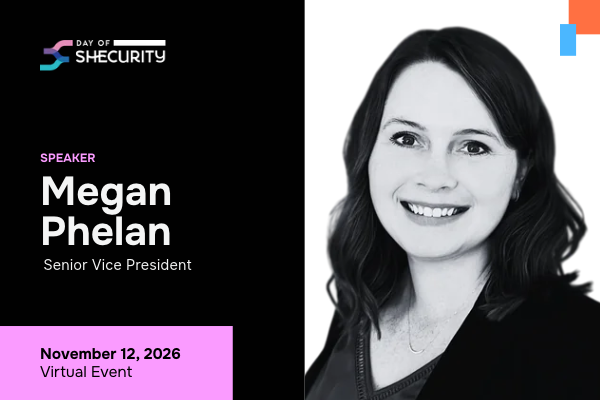
I opened my virtual Day of Shecurity presentation with this question because it gets at a challenge cybersecurity organizations can’t afford to leave unresolved. AI is changing more than how we work. It’s changing what we’re responsible for, often before we’ve established the authority, skills and processes to manage that responsibility.
Highwire’s research report, The Weight of the Remit: How Marketing and Communications Leaders Are Owning Cybersecurity’s AI Mandate, explores that shift. Our survey of 45 senior cybersecurity marketing and communications leaders reveals a gap between being accountable for AI adoption and being equipped to stand behind its outcomes.
Closing that gap is a leadership responsibility, not simply a technology initiative.
The mandate has expanded, but the operating model hasn’t caught up.
Among the leaders we surveyed:
- 98% are accountable for AI adoption.
- 100% say AI is creating organizational value.
- 89% have more responsibility than they did two years ago.
- Just 24% have integrated AI into core workflows, while 73% remain in some form of piloting or experimentation.
The pattern is clear: Responsibility may be widespread, but operational maturity is still developing.
Experimentation is an inherent and valuable aspect of AI adoption. Teams need room to learn where AI can benefit operations and where it falls short. But having access to a tool is not the same as being prepared to manage the potential consequences of using one. Using AI to summarize research requires a much different level of oversight than using AI as the foundation of customer-facing technical claims. The 49% of respondents who’ve yet to integrate a fully-realized AI workflow are leaving room for consequences they’re not prepared to handle.
Adoption tells us whether people are using AI. It doesn’t tell us whether the organization is prepared to answer for the results.
Accountability needs to be designed into the workflow
Consider a hypothetical cybersecurity company preparing an article about an emerging threat.
Marketing uses AI to synthesize research; Communications develops the narrative; a product expert reviews selected technical passages; an executive approves publication.
After the article goes live, someone discovers an unsupported claim.
Each person completed a task. But did anyone own the accuracy of the finished piece?
AI can accelerate individual steps while making end-to-end accountability harder to see. That’s why leaders need to answer four questions before a workflow becomes routine:
- Who owns the inputs? Someone must establish whether source information is reliable and appropriate.
- Who validates the outputs? Reviewers need the expertise to challenge the substance, not just polish the language.
- Who can approve or stop the work? Accountability requires decision-making authority.
- Who leads the response if something goes wrong? Escalation shouldn’t begin with a debate over ownership.
In our survey, 24% identified insufficient internal skills or training as their biggest AI adoption barrier. Giving teams more tools won’t resolve that gap on its own. They need practice recognizing unsupported claims, checking original sources and knowing when to bring in deeper expertise.
Crisis readiness starts before the first statement
One-third of the leaders surveyed said their organizations lacked the skills to respond well in an emergency.
For cybersecurity organizations, that finding deserves attention. These companies are expected to understand risk and communicate clearly under pressure. Yet the people responsible for protecting reputation may not feel equipped to manage the moment when those expectations become most urgent.
During an incident, different teams are working through different questions:
- Security is investigating what happened.
- Legal is assessing disclosure obligations.
- Communications is fielding requests for answers.
- Executives are making decisions with incomplete information.
A strong response depends on how those teams work together before anyone publishes a statement.
Do they share an understanding of the facts? Can technical experts explain what customers need to know? Does communications know which claims remain unverified? Is someone authorized to resolve disagreements quickly?
Credibility doesn’t require knowing everything immediately. It requires distinguishing what is known from what remains uncertain, explaining the next steps and following through.
Those capabilities need rehearsal.
Stronger evidence makes a stronger story
The research also points to an opportunity. Leaders identified customer advocacy (58%), executive thought leadership (56%) and earned media (49%) as approaches they rely on to build reputation and trust.
Each contributes something different: customer experience, executive perspective and outside scrutiny. They become more useful when they draw on shared intelligence rather than separate content calendars.
A customer’s implementation experience can sharpen an executive’s point of view. Questions from journalists can reveal where a product claim needs stronger evidence. Security research can give marketing a more substantive story than another broad promise about AI-powered innovation.
AI can help teams synthesize those signals. It cannot supply the underlying credibility.
The goal shouldn’t be more content for its own sake. It should be a more specific, evidence-based story that the organization can defend.
Four moves leaders can make now
Turning AI adoption into accountable practice doesn’t require starting with an enterprise-wide overhaul.
- Assign an owner. Choose one important AI-enabled workflow and document who owns inputs, validation, approval and escalation.
- Build fluency. Train the team to verify outputs and recognize when human expertise must take priority.
- Rehearse a failure. Test what happens when an AI-assisted technical claim proves wrong. Identify who investigates, who decides and who communicates.
- Connect the signals. Establish a recurring exchange among security, product, marketing, communications and leadership.
Start with one workflow, one trained team and one tested response.
The opportunity isn’t to choose between speed and responsibility. It’s to build an organization capable of both.
When AI shapes an outcome, can you name the person prepared to own it?