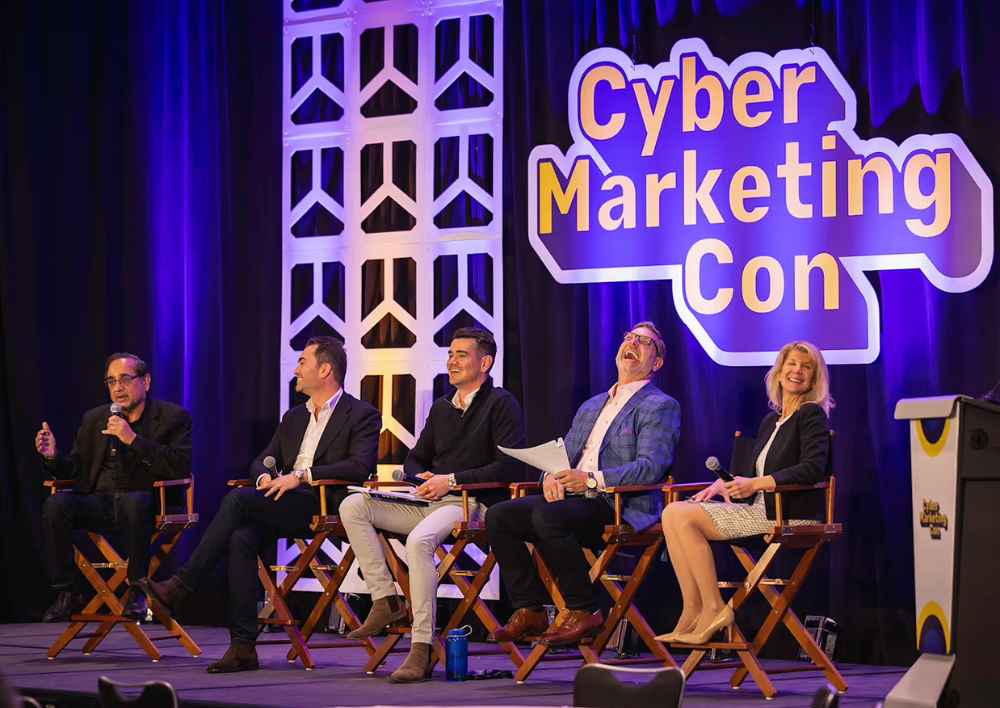
I spent this week at CyberMarketingCon 2025 with our Highwire team, sitting in on smart sessions and having some great conversations with cybersecurity marketers from across the ecosystem. Coming out of the event, a few themes really stood out.
The short version: teams that win in cybersecurity marketing are very clear about who they are, what they stand for and how they show up — in their storytelling, their use of AI, their brand, their buying experience and their relationships.
Here’s what rose to the top.
TL;DR: What Cyber Marketers Are Actually Prioritizing
- Standout brands win on feeling, not features. In a sea of sameness, cyber marketers who use bold, human creativity to build clear, trusted brands are the ones breaking through.
- AI is the accelerator, not the star. Teams are using AI to handle the heavy lift on content, PR prep and ABM so people can focus on strategy, story and relationships.
- Buyers are sharper and busier than ever. High-intent cybersecurity buyers want direct answers, proof and useful community interactions — not volume, fluff or hard sells.
1. Build a Distinctive Brand with Creativity
One of the loudest signals from the conference: everyone is feeling the sameness.
Websites sound alike. Campaigns sound alike. Messaging blurs together, especially in crowded subcategories like identity, cloud security and SecOps. The brands that are cutting through are the ones that commit to a distinctive creative point of view and build a brand around it.
In cybersecurity, brand often shows up as:
- Trust: Do buyers believe you’ll do what you say over time?
- Clarity: Can they quickly tell what role you play in their stack?
- Alignment: Do your values and worldview feel compatible with theirs?
- Community: Do customers feel part of more than a vendor relationship?
Creativity is how those qualities become recognizable. A few patterns I kept hearing:
- Clear narrative beats clever jargon. The teams getting traction can explain their value in a short, memorable story a CISO can repeat to their board.
- Emotion matters, even in cyber. The strongest programs tap into the real human side of security work — fear, frustration, relief, pride.
- Culture is the competition. You’re competing with everything else in your buyer’s feed, not just your direct peers.
- Safety is expensive. Playing it safe often leads to work that disappears into the noise, even when budgets are healthy.
Think about brands like Apple or Nike: people remember how they make them feel. The same principle holds in cybersecurity, even if the language and stakes are different.
A few takeaways from CMOs and comms leaders:
- Brands with a clear purpose and point of view earn more forgiveness when something goes wrong.
- Consistent stories across PR, content, events, analysts and digital channels compound over time.
For your team, it’s worth asking:
- If someone read your homepage once, what would they remember 24 hours later?
- Do your campaigns have a recognizable “signature,” or could they belong to any company in your category?
2. Use AI To Clear Space For Real Work
AI was everywhere at CyberMarketingCon, but the most interesting conversations were about how teams are using it quietly and practically, not theatrically.
The common thread: AI is taking on the heavy lifting so marketers can spend more time on strategy, story and relationships.
How teams are using AI right now:
- Hyper-efficient content workflows
- Summarizing long research reports into exec-ready briefs
- Turning one strong asset (say, a webinar) into blogs, social posts and email copy
- Drafting outlines and first passes that humans then refine and sharpen
- Smarter PR preparation
- Quickly analyzing a reporter’s body of work before an interview
- Stress-testing a pitch by simulating tough questions or pushback
- Reducing the mental load so teams can focus on building trust with journalists
- Sharper ABM and demand programs
- Spotting intent signals across accounts
- Prioritizing territories or verticals based on real behavior
- Informing tailored outreach with better insight into what targets care about
We’re also seeing growing interest in how brands show up inside AI platforms themselves. That’s why we built the Highwire AI Index — to help teams understand and improve how their brand appears across generative AI tools like ChatGPT, Gemini and Claude. As large language models play a bigger role in search and decision-making, this kind of visibility is becoming a new surface area for brand and reputation.
The teams seeing the best results have one thing in common: they feed AI with their own reality — brand guidelines, ICPs, messaging frameworks, stellar examples of past work — and then keep refining how they use it over time.
3. Design For Today’s Cybersecurity Buyer
Across sessions, one thing felt very clear: cybersecurity buyers arrive more prepared and more impatient than ever.
They have questions, not time. They want specifics, not slogans. And they can spot fluff from a mile away.
What that means in practice:
- Search behavior has changed. Buyers arrive with very targeted queries: “How does this integrate with my X?” “Will this reduce time to triage?” “How does this compare to what I already use?”
- Legacy inbound tactics are losing steam. Keyword-stuffed pages and endless ungated content are easy to ignore. Clarity beats volume.
- The best B2B experiences borrow from B2C. Simple navigation, clear value props, frictionless paths to the next step — these are table stakes now.
Community came up a lot, especially in the context of Reddit:
- Reddit is about problem-solving. Users go there to swap notes and ask for real-world experiences, not to be sold to.
- Marketers who show up as peers earn trust. The most effective brands participate as practitioners, share concrete advice and disclose their affiliation transparently.
Hard selling backfires quickly. Pushing product without adding value gets shut down by the community.
Questions to consider:
- Can a busy security leader find a straightforward answer to their top three questions on your site in under two minutes?
- Are your community plays (Reddit, Slack groups, forums, events) designed to help buyers do their jobs better, even if they never buy from you?
- Where are you still designing journeys around your org chart instead of your buyer’s mental model?
Where We Go From Here
If you work in cybersecurity marketing or communications, you’re operating in one of the most complex, high-stakes, noisy environments out there. The teams that move ahead are the ones that:
- Bring a distinctive creative point of view
- Use AI thoughtfully to free up time for higher-value work
- Treat brand as a long-term asset
- Design every touchpoint around how buyers actually behave today
- Invest in the skills and relationships of the humans doing the work
If these themes sound familiar — or if they surface tensions you’re wrestling with — I’m always happy to compare notes.
Our cybersecurity team at Highwire partners with companies across the ecosystem, from fast-growing startups to global enterprises, to build programs that reflect this reality. You can learn more about our cybersecurity practice and reach out if you’d like to talk about what this could look like for your brand.
.png)